Reduce Documentation Errors Before a CMS Survey
Home Health Agency Resources
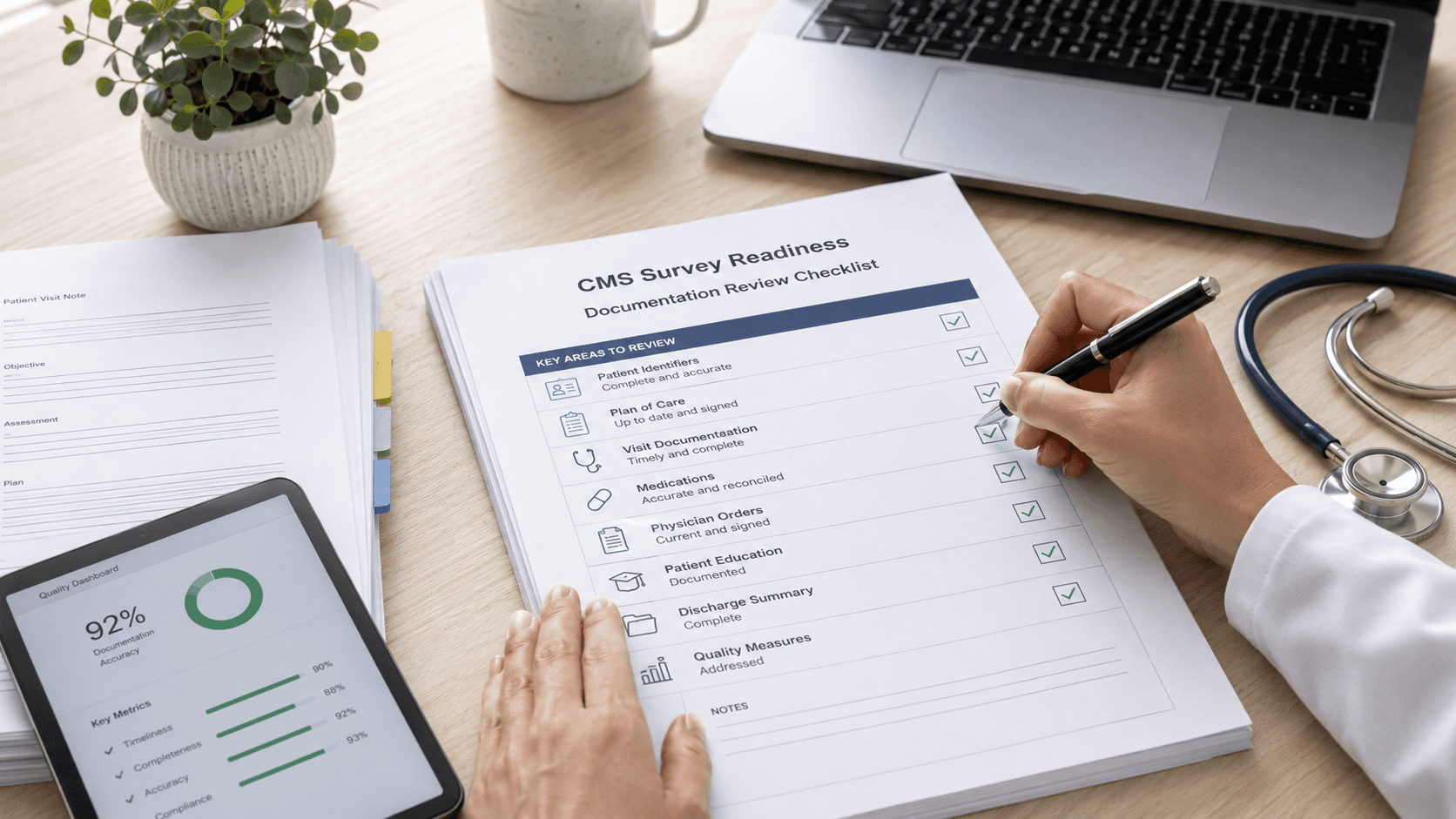
How to Reduce Documentation Errors Before Your Next CMS Survey
Preparing for a CMS survey starts long before surveyors arrive. Agencies that consistently reduce home health documentation errors CMS survey reviewers commonly identify are better positioned to avoid deficiencies, reduce corrective actions, and demonstrate compliance.
Documentation remains one of the most scrutinized areas during a survey. Missing information, inconsistencies between documents, and unsupported services can quickly raise concerns about clinical oversight and regulatory compliance. A proactive review process helps agencies identify problems before surveyors do.
Why Documentation Matters During a CMS Survey
A CMS survey home health agency review evaluates whether patient care is supported by accurate, complete, and compliant documentation.
Surveyors often compare:
OASIS assessments
Physician orders
Plans of Care
Visit notes
Medication profiles
Care coordination documentation
When records do not align, agencies may face citations, corrective action plans, or additional scrutiny.
Strong home health documentation compliance demonstrates that patient care is properly planned, delivered, and documented.
Common Documentation Errors Surveyors Identify
Many survey findings stem from issues that could have been corrected before the chart was ever reviewed.
Inconsistent Documentation
One of the most common problems is conflicting information between documents.
Examples include:
OASIS responses that do not support documented diagnoses
Physician orders that differ from the Plan of Care
Visit notes that conflict with patient assessments
These inconsistencies can create questions about documentation accuracy and clinical oversight.
Missing Physician Orders
Services should always be supported by signed physician orders.
Surveyors frequently identify:
Missing orders
Expired orders
Unsigned verbal orders
Orders that do not match services provided
Incomplete Visit Documentation
Clinicians must clearly document skilled need, interventions performed, and patient response.
Missing details can make it difficult to demonstrate medical necessity and compliance.
Reduce Home Health Documentation Errors CMS Survey Reviewers Commonly Flag
The most effective strategy is implementing a structured review process before records are audited.
Conduct Regular Chart Audits
Routine audits help identify trends before they become survey findings.
Focus reviews on:
OASIS accuracy
Physician order compliance
Plan of Care consistency
Visit note completeness
Medication documentation
Regular audits strengthen overall home health survey readiness and reduce last-minute corrections.
Verify Plan of Care Accuracy
The Plan of Care should match physician orders, diagnoses, frequencies, and interventions throughout the chart.
A thorough review helps prevent discrepancies that surveyors often identify during certification and recertification reviews.
Review OASIS and Documentation Together
OASIS data should accurately reflect the patient's condition and support the clinical record.
Reviewers should verify that:
Diagnoses are supported
Functional assessments are consistent
Clinical documentation aligns with OASIS responses
This step helps improve both compliance and reimbursement accuracy.
Home Health Documentation Best Practices for Survey Readiness
Strong documentation habits reduce risk and improve consistency across the agency.
Standardize Documentation Reviews
Create a checklist that reviewers use for every chart.
Areas to review include:
Orders
OASIS
Plan of Care
Visit frequencies
Diagnoses
Care coordination notes
Consistency reduces the likelihood of missed issues.
Educate Clinical Staff
Many documentation deficiencies originate from misunderstandings regarding regulatory requirements.
Ongoing education helps clinicians understand:
Documentation expectations
Skilled need requirements
Compliance standards
Common survey findings
Address Errors Immediately
When issues are identified, corrective action should occur quickly.
Prompt corrections help prevent recurring problems and strengthen overall compliance efforts.
The Value of a Pre-Survey Documentation Review Home Health Agencies Can Trust
A comprehensive pre-survey documentation review home health agencies perform before a survey can reveal compliance gaps that may otherwise go unnoticed.
These reviews often identify:
Missing documentation
Order discrepancies
OASIS inconsistencies
Plan of Care errors
Regulatory risks
Addressing these issues before a survey improves preparedness and reduces the likelihood of deficiencies.
Conclusion
Successful home health CMS survey preparation depends on accurate, complete, and consistent documentation. Agencies that prioritize chart audits, documentation reviews, staff education, and compliance monitoring are better equipped to reduce survey findings and improve operational performance.
LS Consulting Solutions provides comprehensive quality assurance and compliance reviews designed to help agencies reduce home health documentation errors CMS survey teams frequently identify. Our pre-submission and pre-survey reviews help agencies strengthen documentation quality, improve compliance, and approach surveys with greater confidence.
See also


Let's Build a Better Process for Your Agency.
The onboarding process is simple and straightforward. Fill out the form and we will walk you through every step within one business day.